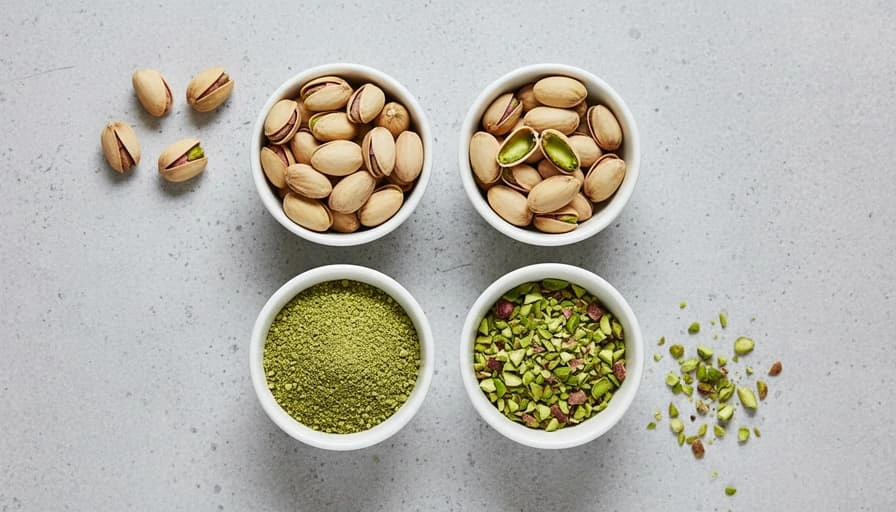

The pistachio market in the GCC is going through a notable shift in 2026. Demand is rising, driven by a wave of premium pistachio and chocolate products, while global supply is under pressure that has pushed prices higher. This combination of growing demand and tight supply makes understanding pistachio supply trends essential for every confectionery and chocolate manufacturer and distributor in the region.
This article gives a practical view of the GCC pistachio market: the key trends, why prices are rising, how manufacturers are coping with volatility, and the role of source diversification in securing supply. If you’re looking for a practical foundation for buying, start with our guides on Syrian and American pistachios and bulk pistachio buying.
What’s the state of the GCC pistachio market today?
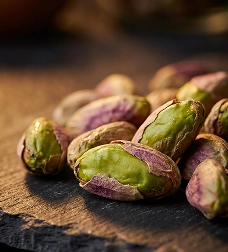
The GCC pistachio market is in a phase of high demand and tight supply. The viral “Dubai chocolate” trend, built on pistachio and knafeh, has lifted demand for pistachio products, while global supply chains face shortages and rising prices. The result is stronger competition for high-quality pistachios and pressure on manufacturers’ costs across the region.
On the demand side, Saudi Arabia is the largest confectionery market in the GCC, and market reports suggest it accounts for roughly two-thirds of the region’s consumption, with the premium segment growing fastest. This demand is fueled by a strong gifting culture during Ramadan, Eid, and celebrations, along with religious tourism and rising spending on premium products. On the supply side, the pistachio market faces global pressures that pass directly to buyers in the Gulf.
Key pistachio supply trends in the GCC
Several trends intersect to shape the GCC pistachio market today, united by one theme: demand is leading and supply is struggling to keep up.
| Trend | Driver | Impact on buyers |
|---|---|---|
| Rising demand | Boom in premium pistachio and chocolate products | More competition for volume and quality |
| Rising prices | Global shortage and supply disruption | Higher ingredient costs |
| Production concentration | Reliance on a few producing countries | Disruption and volatility risk |
| Source diversification | Seeking alternatives and multiple origins | More stable supply |
| Local manufacturing growth | Vision 2030 and food-sector investment | Rising demand for reliable supply |
The common thread is that a business which plans its supply ahead and diversifies its sources is in a far stronger position than one relying on a single origin or on spot buying. The main market drivers are worth a closer look.
Rising demand for pistachio products
The “Dubai chocolate” wave — pistachio-and-knafeh bars — pushed demand for pistachios to record levels and spread into launches from global and local brands blending pistachio with Middle Eastern flavors like knafeh and baklava. Consumers in the Gulf have shown a clear willingness to pay more for these premium products, which has reinforced demand for high-quality pistachios in particular.
Rising prices and tight global supply
Market reports indicate that global pistachio prices rose more than 50% in early 2026, with world production down around 8% in the 2025/2026 season and disruption to exports from some producing countries. Prices had already jumped from roughly $16–17 per kilogram in 2024 to $22–23 in 2025 before climbing further, and kernel prices rose noticeably. This added supply pressure has pushed up pistachio costs for Gulf confectionery manufacturers, especially for higher grades.
Production concentration and its risks
Global pistachio production is concentrated in a few countries: the United States, Iran, and Turkey together account for more than 85% of world output. This concentration makes the pistachio market sensitive to any disruption — climatic, geopolitical, or seasonal — in any of these countries, which explains the sharp price swings when one source falls short.
Global pistachio sources and their impact on the Gulf
To understand volatility in the GCC pistachio market, it helps to look at its global sources, since buyers in the region rely almost entirely on imports. The table below summarizes the main sources and their role in securing supply:
| Origin | Share of global output | Strength | Supply note |
|---|---|---|---|
| United States (California) | Largest worldwide | Consistent specs, large volumes | Much is tied to long-term contracts |
| Iran | Major share | Prized flavor and varieties | Exports affected by disruption |
| Turkey | Growing share | Rising market presence | Lacks scale to offset shortfalls quickly |
| Syria (Aleppo) | Specialized | Distinctive flavor and color | Premium origin for fine products |
This distribution explains why the pistachio market reacts so quickly to any disruption: the world’s reliance on a limited number of sources means a shortfall in one feeds straight into prices and availability in the Gulf. That is why diversifying origins matters so much for buyers in the region.
Why are pistachio prices rising?
Pistachio prices are rising due to a combination of factors: a jump in demand from booming pistachio products, lower global production in a weak season, export disruption from major producing countries, and water and climate challenges in growing regions. Concentration of production in a few countries amplifies the impact of any shortfall on price.
It’s important for buyers to understand that rising prices are not a passing event but the result of a structural imbalance between concentrated supply and growing demand. The main factors include:
- Demand surge: the boom in premium pistachio products lifted demand faster than supply.
- Weak season: the alternate-bearing nature of pistachios (strong and weak years) cut the global crop.
- Export disruption: tensions affected exports from some major producing countries.
- Water and climate: water scarcity and weather swings in growing regions pressure output.
- Source concentration: reliance on a few countries magnifies the price impact of any shortfall.
How do these trends affect GCC confectionery manufacturers?
These pistachio market trends affect Gulf confectionery manufacturers through higher ingredient costs, difficulty securing high-quality volumes, and price swings that complicate pricing and planning. This pressure is pushing manufacturers to rethink their supply strategies rather than rely on a single source or spot buying.
In practice, manufacturers face hard choices: absorb the cost at the expense of margin, raise product prices, or adjust recipes. But pistachio remains hard to replace in many premium products that are sold on its flavor and presence. As a result, securing stable supply at consistent quality has shifted from an advantage to a competitive necessity in today’s pistachio market.
How buyers are managing pistachio market volatility
Buyers manage pistachio market volatility by diversifying supply sources, locking in prices through advance agreements, buying in measured quantities, and focusing on a reliable supplier that ensures quality and continuity. Combining more than one origin also reduces the risk of a single source being disrupted.
Among the strategies smart Gulf manufacturers are using:
- Diversify sources: rely on more than one origin (Syrian and American) to cut disruption risk.
- Lock in prices: agree quantities at set prices to protect cost, as covered in our guide to bulk pistachio buying.
- Plan ahead: forecast needs and secure them early instead of buying on the spot.
- Choose a reliable supplier: build a relationship with a supplier that ensures quality and documents.
- Focus on the right quality: choose the right grade and form to avoid unnecessary cost.
When diversifying sources, verifying quality and compliance with Saudi Food and Drug Authority (SFDA) food-safety requirements remains essential, so that reducing risk never comes at the expense of product safety and quality.
The role of Syrian and American pistachios in supply security
Combining Syrian and American pistachios plays a central role in securing supply amid pistachio market volatility. Syrian pistachios provide flavor and authenticity for premium products, American pistachios provide consistent specifications and large volumes, and relying on both origins reduces the risk of disruption while adding flexibility in quality and cost.
In a market defined by production concentration and supply volatility, diversifying origin becomes a first line of defense against disruption. Rather than tying production to one source, combining Syrian and American pistachios lets a manufacturer direct each origin to what suits it, with a fallback if one becomes constrained. You can explore each origin on our Syrian pistachios and American pistachios pages.
Local manufacturing and Vision 2030
One of the defining features of the GCC pistachio and confectionery market is the growth of local manufacturing, driven by Saudi Vision 2030, large investment in the food sector, and incentives for local and halal-certified production. The sector has seen global and local brands launch innovative pistachio products that blend Middle Eastern flavors like knafeh and baklava with chocolate, raising demand for reliable, consistent pistachio supply.
This expansion in local manufacturing means growing demand for bulk pistachios with consistent quality and large volumes, and reinforces manufacturers’ need for suppliers who can ensure continuity and documentation. For distributors and manufacturers, this growth is an opportunity, but it doubles the importance of securing a stable pistachio supply chain in a volatile market.
Outlook for the GCC pistachio market
Indicators point to continued growth in pistachio demand in the Gulf, driven by Vision 2030, local manufacturing, gifting culture, and a preference for premium products. Supply may improve gradually as global plantings expand, but price volatility is likely to remain a feature of the market in the near term.
For buyers in the Gulf, the core message is that strong demand will persist, and that managing supply smartly — through diversification, planning, and long-term relationships with reliable suppliers — is what separates a business shaken by every price spike from one that keeps its cost and quality stable in a volatile pistachio market.
Why Alyassin Farms?
At Alyassin Farms, we help confectionery, chocolate, and bakery manufacturers and distributors in the Gulf secure a stable, consistent pistachio supply amid market volatility. We offer both Syrian and American pistachios, backed by a family heritage in pistachios dating to the 1970s and direct ties to the source.
We focus exclusively on wholesale supply, with multiple forms and grades and flexible quantities, plus paid samples with photos and video so you can evaluate quality before ordering. Contact us to secure your pistachio supply with confidence in today’s market conditions.
Frequently Asked Questions
Why did pistachio prices rise in 2026?
Pistachio prices rose in 2026 due to a combination of surging demand from booming pistachio products, lower global production in a weak season, and export disruption from major producing countries. Concentration of production in a few countries amplified the impact of this shortfall on prices.
Will the pistachio shortage continue?
The shortage may ease gradually as seasons improve and global plantings expand, but price volatility is likely to remain a feature of the pistachio market in the near term because of strong demand and production concentration. Planning and source diversification therefore stay important.
How does the pistachio shortage affect confectionery manufacturers?
The shortage raises ingredient costs, makes high-quality volumes harder to secure, and creates price swings that complicate pricing. Manufacturers respond by absorbing part of the cost, raising prices, or diversifying sources and locking in prices in advance.
How do I secure pistachio supply for my factory amid volatility?
To secure supply, diversify across more than one origin, lock in prices through advance agreements, plan your needs early, and rely on a supplier that ensures quality and continuity. Combining Syrian and American pistachios reduces the risk of a single source being disrupted.
What is the largest pistachio market in the GCC?
Saudi Arabia is the largest confectionery and pistachio market in the GCC, followed by the UAE, with strong growth in the premium segment. This demand is fueled by gifting culture, religious tourism, and rising spending on premium products.
Will pistachio demand keep growing?
Indicators point to continued growth in pistachio demand in the Gulf, supported by Vision 2030, local manufacturing, gifting culture, and a preference for premium products. This makes securing a stable supply a priority for manufacturers and distributors.