Not all pistachios are created equal, and choosing the right pistachio grade for your product line is a decision that directly affects your finished product’s appearance, taste, and cost. A higher grade delivers better color, size, and uniformity but comes at a higher price, while a lower grade can be perfectly suitable for products where the pistachio isn’t visible. The real skill for a buyer lies in matching the grade to the product rather than always buying the best.
This guide explains the main pistachio grades, how to choose the right one for each product, how grade interacts with form and price, and how to verify quality before you buy. It pairs naturally with our guides on Syrian and American pistachios , pistachio product forms, and pistachio sizes.
What is a pistachio grade?
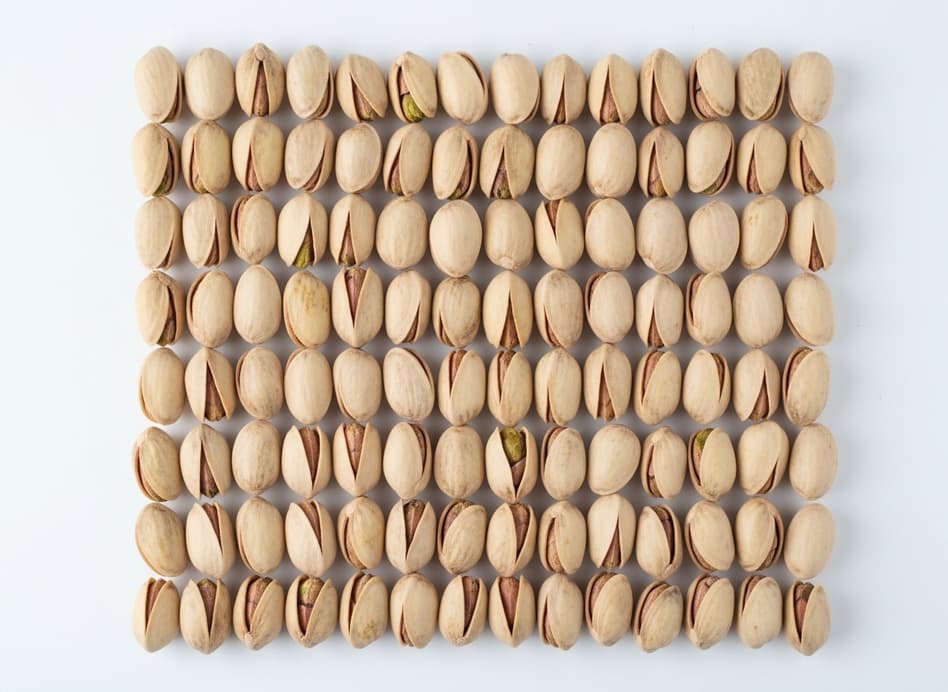
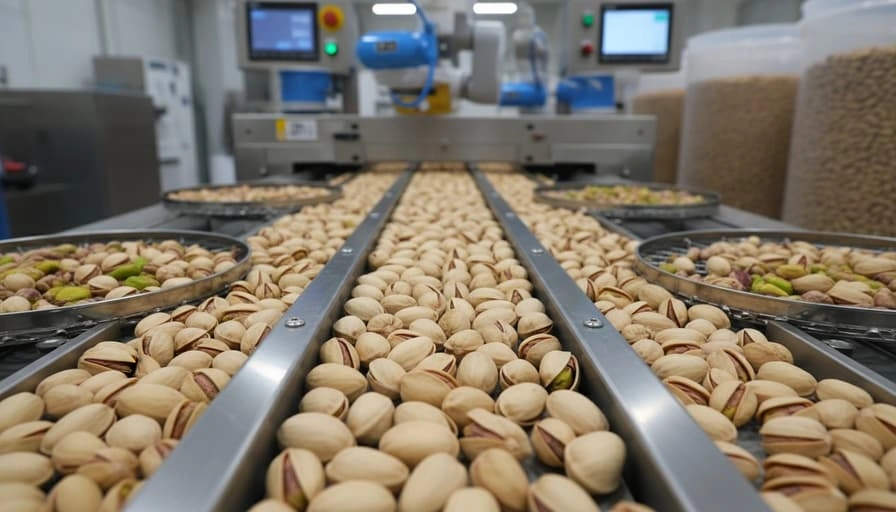
A pistachio grade is a quality classification based on characteristics such as color, size, uniformity, the proportion of whole versus broken kernels, and the level of defects or foreign matter. Higher grades have more consistent color and size and fewer defects, while lower grades allow more variation. Grade determines both price and which products the pistachio is best suited for.
Grading is essentially a way of sorting pistachios by quality so buyers can match what they pay for to what their product actually needs. While exact grade names and standards vary between suppliers and regions, the underlying logic is consistent: the more uniform, colorful, and defect-free the pistachio, the higher the grade and the price.
The main pistachio grades
Although terminology differs by supplier, most pistachio grades fall into three broad tiers. Understanding these tiers helps you specify what you need clearly:
Premium grade
Premium-grade pistachios offer the best color, the most consistent size, the highest share of whole kernels, and the fewest defects. This grade is the right choice for products where the pistachio is visible and central to perceived value — luxury chocolate, fine baklava, and gift-grade sweets. It costs the most, but it delivers the appearance and uniformity that premium products depend on.
Commercial grade
Commercial-grade pistachios offer good quality with slightly more variation in color and size and a somewhat higher share of broken kernels. This grade balances quality and cost, making it a practical choice for everyday products where the pistachio is present and visible but doesn’t need to be flawless.
Food-industry grade
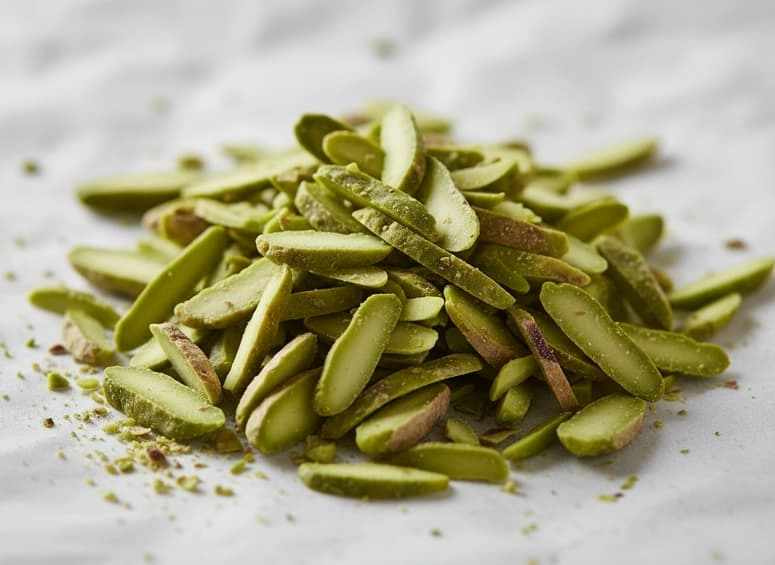
Food-industry grade (sometimes called manufacturing or processing grade) allows the most variation and a higher proportion of broken pieces. Because it is typically used where pistachios are ground, blended, or hidden inside a product — pastes, fillings, and flavorings — appearance matters less, so this grade offers the lowest cost without compromising the end result.
| Pistachio grade | Characteristics | Best used for |
|---|---|---|
| Premium | Best color, uniform size, mostly whole, minimal defects | Visible, premium products |
| Commercial | Good color, some variation, more broken kernels | Everyday visible products |
| Food-industry | More variation, higher share of pieces | Pastes, fillings, processed uses |
How to choose the right pistachio grade for your product
To choose the right pistachio grade, start from how visible the pistachio is in your product. If it is seen and sold on appearance, choose premium. If it is present but not the focal point, commercial grade balances cost and quality. If it is ground or hidden, food-industry grade keeps cost down without affecting the result.
Match the grade to the product using these criteria:
- Visibility: the more visible the pistachio, the higher the grade you need.
- Product positioning: premium lines justify premium grade; standard lines often suit commercial.
- Processing: ground or blended uses can drop to food-industry grade safely.
- Budget: paying for premium where it isn’t seen wastes money, not improves quality.
- Consistency needs: products that demand uniform appearance need higher, more consistent grades.
The most common improvement a buyer can make is to stop using one grade for everything. Assigning the right grade to each product — rather than over-buying or under-buying — protects both quality and margin.
| Product / use | Recommended grade | Why |
|---|---|---|
| Premium chocolate with visible pistachio | Premium | Appearance drives perceived value |
| Fine baklava and gift sweets | Premium | Color and whole kernels matter |
| Everyday pastries and cookies | Commercial | Good quality at balanced cost |
| Pistachio paste and fillings | Food-industry | Pistachio is ground, not seen |
| Ice cream and flavorings | Food-industry | Flavor matters more than appearance |
Grade, form, and price: how they interact
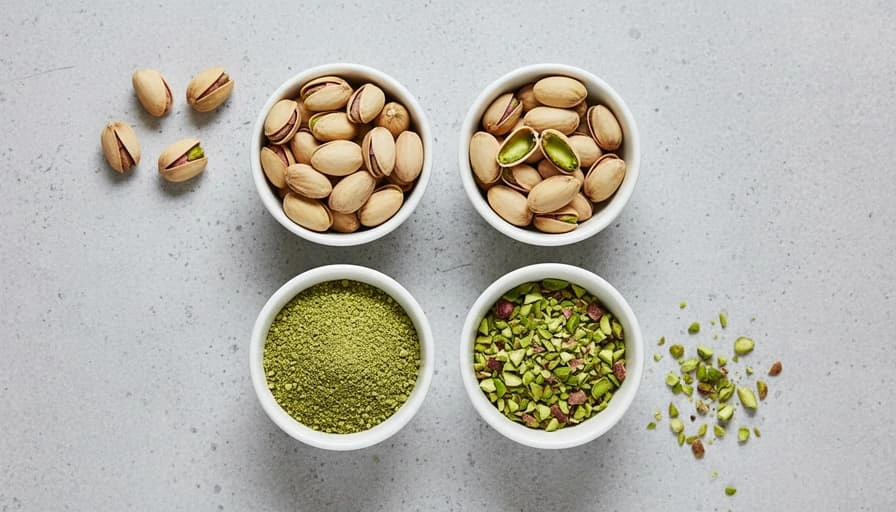
Grade, form, and price are closely linked. A higher grade costs more, and the form you choose — whole kernels, halves, or granulated — also affects price and suitability. Choosing a lower form (such as halves or pieces) within a suitable grade is often a smart way to control cost without sacrificing what the product needs.
Grade and form should be decided together. For example, a product that hides the pistachio can use a food-industry grade in a granulated form for the lowest cost, while a visible product needs a premium grade in whole or half kernels. Our guide to pistachio product forms explains how form affects use and price, and buying the right combination in volume can lower cost further, as covered in our guide to bulk pistachio buying.
Common mistakes when choosing a pistachio grade
Choosing a grade isn’t only about buying the best available. Several common mistakes raise cost or hurt quality:
- Over-buying grade: paying for premium pistachios in products where they’re ground or hidden.
- Under-buying grade: using a low grade in visible products, hurting appearance and brand.
- Ignoring uniformity: focusing only on color while overlooking size consistency and breakage.
- Not specifying clearly: ordering without defining grade, origin, and form in writing.
- Judging on price alone: comparing suppliers without comparing the actual grade delivered.
How to verify pistachio grade and quality
To verify a pistachio grade, check color, size uniformity, the share of whole versus broken kernels, and the level of defects and foreign matter against your agreed specification. Request a sample and supporting documents such as a certificate of analysis, and confirm the product meets food-safety requirements before use.
Practical verification steps protect you from paying premium prices for a lower grade:
- Define the spec: agree on grade, origin, form, color, size, and maximum defects in writing.
- Request a sample: evaluate an actual sample before committing to a large order.
- Check documents: review a certificate of analysis and quality documentation.
- Inspect on arrival: compare each shipment against the agreed specification.
Whatever the grade, make sure the product complies with Saudi Food and Drug Authority (SFDA) food-safety requirements, so quality and safety are confirmed before the pistachios reach your production line.
Why Alyassin Farms?
At Alyassin Farms, we supply Syrian and American pistachios across multiple grades and forms, with a family heritage in pistachios dating to the 1970s. We help you select the right grade for each product line so you pay for quality where it counts and control cost where it doesn’t.
We work exclusively in wholesale supply for confectionery and chocolate manufacturers, bakeries, and distributors, and we provide paid samples with photos and video so you can confirm grade and quality before you order. Browse our products or contact us for a quote tailored to your product line.
Frequently Asked Questions
What is a pistachio grade?
A pistachio grade is a quality classification based on color, size, uniformity, the share of whole versus broken kernels, and the level of defects. Higher grades are more uniform and defect-free and cost more; lower grades allow more variation at a lower price.
Which pistachio grade is best for chocolate?
For chocolate where the pistachio is visible, a premium grade is best because color and whole kernels drive perceived value. If the pistachio is processed into a filling or paste, a food-industry grade works well at lower cost without affecting the result.
Is a higher pistachio grade always better?
No. A higher grade is only better when the pistachio is visible or appearance matters. For products where the pistachio is ground or hidden, paying for a premium grade wastes money without improving the finished product.
How do I know what pistachio grade I’m getting?
Define the grade, origin, and form in writing, request a sample, and review documents such as a certificate of analysis. Inspect each shipment against the agreed specification for color, size, breakage, and defects to confirm the grade delivered.
Can I use different pistachio grades for different products?
Yes, and you should. Using a premium grade for visible products and a lower grade for processed ones lets you protect appearance where it matters and control cost where it doesn’t, improving overall margin.
Does pistachio grade affect price a lot?
Yes. Grade is a major driver of pistachio price, alongside origin and form. Higher grades with better color, uniformity, and more whole kernels cost noticeably more, which is why matching grade to each product is important for cost control.