For anyone buying pistachios in volume, the first thing on a spec sheet is usually a pair of numbers — 20/22, 24/28 — and they decide both what you pay and what the product is suited for. Those numbers are pistachio sizes: the count of nuts per unit weight. Alongside size, color, shell condition, and defect levels complete the picture, and together they turn a vague “pistachios” into a precise, comparable specification.
This buyer’s reference explains pistachio sizes and grading from a direct grower and exporter’s perspective: how size is counted, how color and shell quality are graded, and how it all affects price and use. Once you know which size and grade you need, our guide on how to choose the right pistachio grade for your product line helps you decide, and for grading specific to shelled product, see our guide on pistachio kernels grades and specifications. To view the forms we supply, see our pistachio products.
Pistachio Sizes: Count per Ounce or Kilogram
Pistachios are sized by count per unit weight — the number of nuts in an ounce or kilogram. A lower count means larger nuts, so a 20/22 size (20–22 per ounce) is larger than a 24/28 size. Larger, more uniform sizes generally command higher prices and suit retail and premium uses, while smaller sizes are more economical and common in processing.
The key point for buyers is that size is measured, not described. Terms like “large” or “jumbo” mean little without a count, so always specify the count range you want. Uniformity within that range also matters: a consistent size looks better on shelf and behaves predictably in processing, while a wide size spread signals looser grading.
| Size grade (per ounce) | Relative size | Typical use |
|---|---|---|
| 18/20 to 20/22 | Extra large / jumbo | Premium retail, gifting |
| 21/25 | Large | Retail snacking |
| 22/24 to 24/26 | Medium | Everyday, mixed use |
| 26/28 to 28/30 | Small | Processing, grinding, paste |
Exact size bands vary by origin and supplier, but the logic holds everywhere: the lower the count, the larger and more premium the nut. Kernels are sized on the same count principle, measured without the shell.
Color Grading
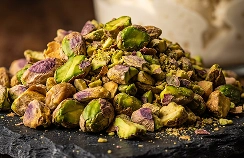
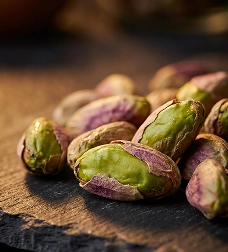
Color grading assesses the greenness of the kernel, which is a major quality and price factor. A deeper, more natural green is prized — especially for confectionery, where the kernel is visible — while paler kernels are graded lower. Natural green comes from variety, climate, and harvest timing, and buyers should distinguish genuine color from artificially dyed product.
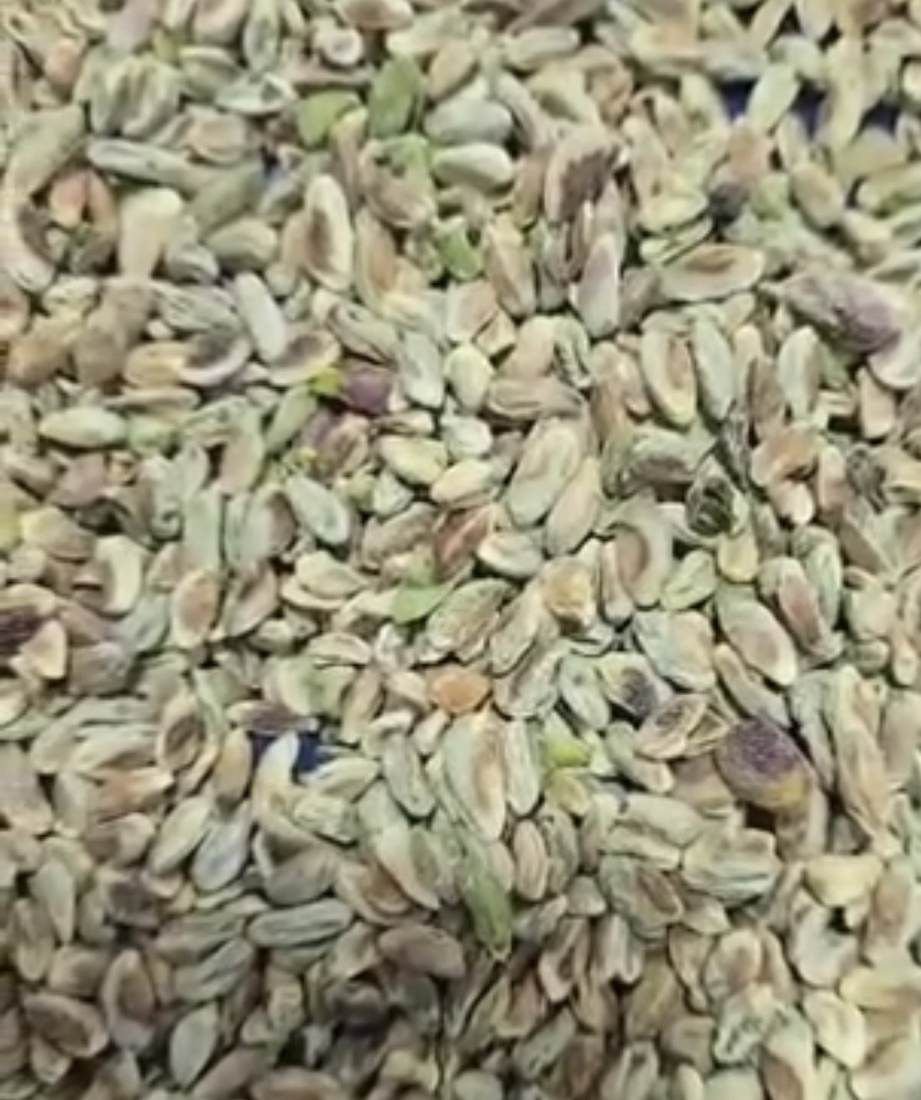
Because color drives so much of a pistachio’s value in confectionery, it is worth specifying alongside size. A large but pale kernel and a smaller but deeply green one serve different markets, and deciding which matters more for your product is part of writing a useful specification.
Shell and Defect Grading: Open vs Closed
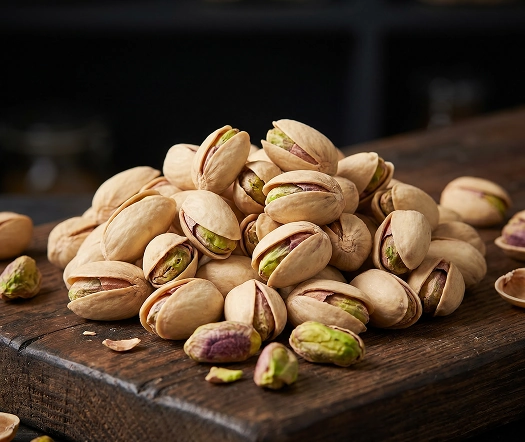
Quality grading covers shell opening and defects. Naturally open (split) shells are the highest value for in-shell snacking because they are ready to eat, while closed-shell pistachios are graded lower since they need cracking. Defects such as shell staining, adhered hull, insect damage, kernel spots, and foreign material all reduce grade and price.
- Open (split) shell: highest value for in-shell snacking — ready to eat without cracking.
- Closed shell: graded lower; often diverted to kernel production rather than in-shell sale.
- Shell staining: surface discoloration lowers the visual grade of in-shell product.
- Defects: insect damage, adhered hull, kernel spots, and foreign material all reduce grade.
For kernels specifically, soundness (whole, split, or broken) is graded in place of shell opening. The principle is the same: fewer defects and a more intact, uniform product command a higher grade and price.
How Size and Grade Affect Price and Use
Size and grade together determine both price and best use. Larger, open-shell, deeply green pistachios with few defects sit at the top of the price range and suit premium retail and confectionery. Smaller, closed, paler, or more defective lots are more economical and are typically directed to processing, grinding, and paste — matching size and grade to purpose controls cost without wasting quality.
| Factor | Higher grade | Lower grade | Typical use |
|---|---|---|---|
| Size (count) | Larger, uniform | Smaller, mixed | Retail vs processing |
| Color | Deep green | Pale | Confectionery vs bulk |
| Shell | Naturally open | Closed | Snacking vs kernels |
| Defects | Minimal | Higher | Premium vs economy |
A smart buyer does not always buy the largest size or the top grade. If pistachios will be ground into paste, paying a premium for large open shells wastes money — a smaller size and lower shell grade with good color and flavor deliver the same result for less. The goal is to match size and grade to application, not to over-buy quality the product does not need. For a full framework on choosing the right grade tier for each product, see our guide on how to choose the right pistachio grade for your product line.
International Sizing and Grading Standards
International standards give the pistachio trade a common reference for size, color, and defect tolerances. Rather than relying on subjective terms, buyers and suppliers can point to a recognized standard to define what each size and grade means. This is especially valuable in cross-border trade, where a shared framework prevents misunderstandings about quality expectations.
A widely used reference is the USDA pistachios in-shell grades and standards, which defines size, grade requirements, and defect tolerances for in-shell pistachios. Using a recognized standard as the basis of your specification makes orders clearer and disputes far less likely, whatever the origin.
Clear Sizing and Grading at Alyassin Farms
As a direct grower and exporter, we size and specify our pistachios transparently — by count (size), color, shell condition, and form — across both Syrian Halabi and American origins. That means you know exactly what you are ordering, receive it consistently across shipments, and can match size and grade to your product and price point rather than guessing from a vague description.
If you want pistachios supplied to a clear, consistent size and grade specification, our team can help you match size and grade to your application. Request a quote today, or contact us for a sample to grade against your own specification.
Frequently Asked Questions
What do pistachio size numbers like 20/22 mean?
Pistachio sizes are given as a count per ounce (or kilogram) — 20/22 means 20 to 22 nuts per ounce. A lower count means larger nuts, so 20/22 is larger than 24/28. Size is measured, not described, so always order by count rather than words like large or jumbo.
What is the difference between pistachio size and grade?
Size refers specifically to the count per unit weight (how large the nuts are), while grade is broader, covering color, shell condition, defects, and uniformity as well as size. A specification usually combines both — for example a large, deep-green, open-shell grade at a defined count.
Which pistachio size is best?
There is no single best size; it depends on use. Larger sizes (lower counts like 20/22) suit premium retail and gifting where appearance matters, while smaller sizes are more economical and common in processing, grinding, and paste. Match the size to your product and price point.
How is pistachio color graded?
Color grading assesses the greenness of the kernel. A deeper, more natural green is prized, especially in confectionery where the kernel is visible, while paler kernels grade lower. Natural green comes from variety, climate, and harvest timing, and buyers should distinguish it from artificially dyed product.
Are there international standards for pistachio sizes and grades?
Yes. Recognized standards such as the USDA pistachios in-shell grades and standards define size, color, and defect tolerances. Using a recognized standard as the basis of a specification makes cross-border orders clearer and reduces the risk of disputes over quality expectations.