Buying quality pistachios is only half the job — keeping them that way is the other half. Proper pistachio storage protects the flavor, color, and safety you paid for, and poor storage can undo all of it within weeks, especially when you are holding bulk quantities for production. For manufacturers, bakeries, and distributors, storage is a quality decision as much as sourcing is.
This guide covers how to store bulk pistachios and what determines their shelf life: the conditions that matter, how shelf life differs by form, the signs of spoilage, and the link between storage and aflatoxin risk. It builds on our broader B2B guide to sourcing wholesale pistachios and our guide to pistachio quality and food safety.
In short: how to store bulk pistachios
Good pistachio storage keeps bulk product in a cool, dry, dark place in sealed packaging, with refrigerated or cold storage for large quantities or long holding periods. Heat, humidity, light, and air accelerate loss of flavor and color and can cause rancidity. In-shell pistachios keep longest thanks to natural protection, while shelled kernels and paste are more perishable and need closer care.
What affects pistachio shelf life
Pistachio shelf life is governed by a handful of conditions that all work in the same direction — the more a pistachio is exposed to them, the faster it declines. Understanding these factors lets you plan pistachio storage deliberately rather than simply hoping the product holds.
| Factor | Effect on pistachios |
|---|---|
| Heat | Speeds up rancidity and loss of flavor and color |
| Humidity | Raises moisture, risking spoilage and mold |
| Light | Degrades color and accelerates quality loss |
| Air / oxygen | Causes oxidation and rancidity over time |
| Form | Shelled and ground forms decline faster than in-shell |
Because these factors compound, controlling them together is what protects shelf life. Cool, dry, dark, and sealed storage addresses all of them at once, which is why it is the standard for bulk pistachios.
How to store bulk pistachios correctly
To store bulk pistachios correctly, keep them cool, dry, dark, and sealed, away from strong odors, and use cold storage for large volumes or extended holding. Lower temperatures meaningfully extend shelf life, sealed packaging limits exposure to air and moisture, and darkness protects color. Treat the supplier’s packaging as the first layer of protection and avoid repeated exposure to warm, humid air.
Effective pistachio storage comes down to controlling temperature, moisture, light, and air, and to handling large quantities in a way that does not repeatedly expose the product. The practices below keep pistachios at their best for as long as possible.
- Keep it cool: lower temperatures slow rancidity, so cool or cold storage extends shelf life — the larger the quantity, the more this matters.
- Keep it dry: avoid humidity, which raises moisture and risks spoilage and mold.
- Keep it sealed: sealed packaging limits exposure to air and moisture and protects flavor.
- Keep it dark: protect from direct light, which degrades color over time.
- Keep it away from odors: pistachios can absorb strong smells, so store them away from pungent products.
For bulk quantities held over time, cold storage is often the most reliable choice, and dividing stock so you open only what you need avoids exposing the whole lot to warm, humid air repeatedly.
Shelf life by form: in-shell, kernels, and paste
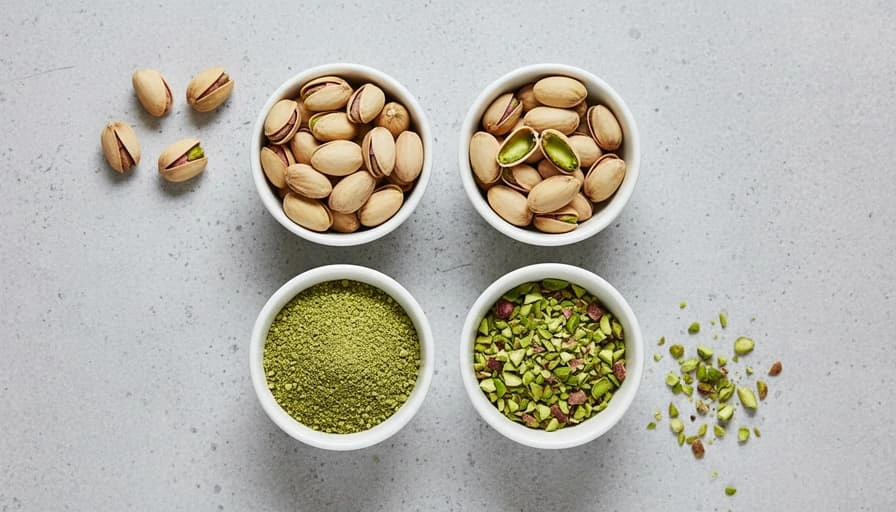
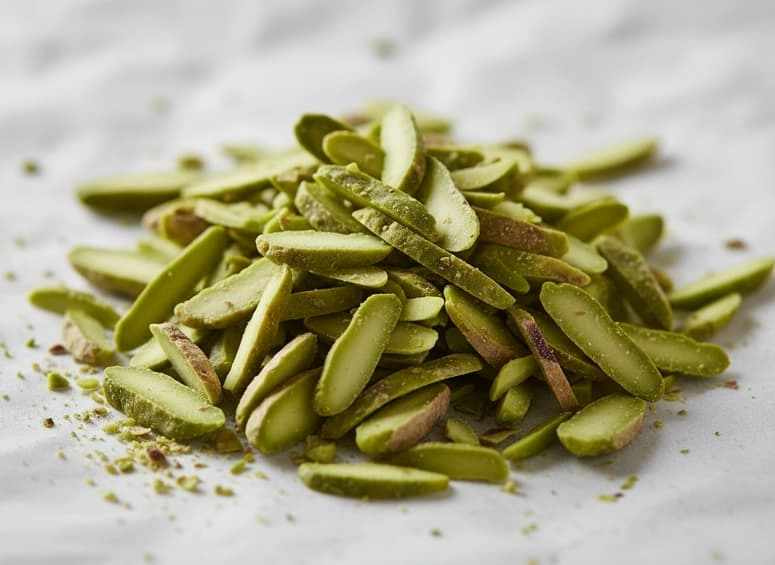
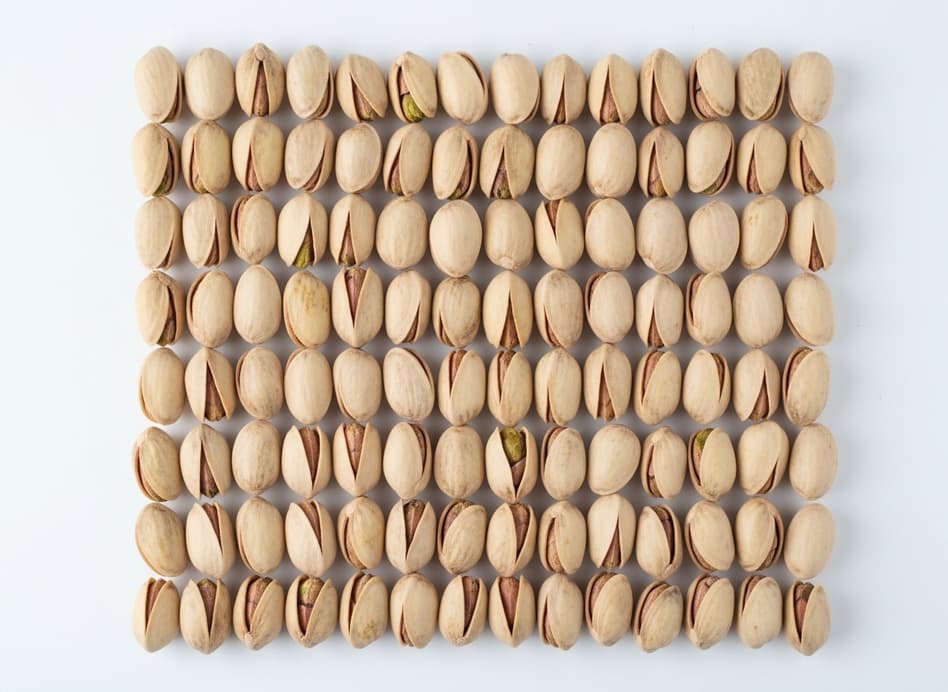
Shelf life varies by form. In-shell pistachios keep longest because the shell provides natural protection. Shelled kernels are more exposed and decline faster, while granulated and paste forms are the most perishable because of their greater surface area. Cold storage extends the shelf life of every form, and the more processed the product, the more careful storage it needs.
Form has a large influence on how long pistachios last, because it determines how exposed the nut is to air and moisture. The table below shows the relative shelf life of the main forms under good storage conditions.
| Form | Relative shelf life | Storage note |
|---|---|---|
| In-shell | Longest | Shell gives natural protection |
| Whole kernels | Shorter than in-shell | More exposed; seal and keep cool |
| Granulated | Shorter still | Greater surface area oxidizes faster |
| Paste | Most perishable | Needs the closest temperature control |
The practical takeaway is to match storage to form and to plan how much processed product you hold at once. For more on choosing forms, see our guide to pistachio product forms.
Signs pistachios have gone bad
Pistachios that have gone bad show a rancid or off smell, a dull or faded color, a stale or bitter taste, or signs of moisture and mold. Rancidity from oxidation is the most common problem and produces a sharp, unpleasant odor. Any of these signs means the product’s quality has declined and it should not go into production.
Knowing the signs of spoilage protects your finished product from a bad batch. Most problems trace back to rancidity or moisture, and both are detectable with a quick check before pistachios enter the line.
- Rancid or off smell: a sharp, unpleasant odor is the clearest sign of oxidation.
- Dull or faded color: loss of the vivid green signals age or poor storage.
- Stale or bitter taste: an off flavor means the product is past its best.
- Moisture or mold: any dampness or visible mold means the batch is unsafe to use.
When in doubt, do not use the product. The cost of one questionable batch is far lower than the cost of a compromised finished product reaching customers.
Storage and aflatoxin risk
Storage is directly linked to aflatoxin risk. Aflatoxin can develop when pistachios are exposed to heat and humidity, so poor storage after purchase can raise the risk even in a batch that arrived compliant. Keeping pistachios cool, dry, and sealed is part of controlling that risk, alongside sourcing from a supplier who dries and stores correctly at origin.
Pistachio storage is not only about flavor and color — it also affects safety. Aflatoxin, the most serious safety issue in pistachios, can develop under warm, humid conditions, which means storage failures after purchase can introduce risk into a batch that passed testing on arrival. Proper pistachio storage is therefore a food-safety measure, not just a quality one.
This is why sourcing and storage work together: a supplier who dries and stores correctly at origin gives you a sound starting point, and good storage on your side preserves it. For the full picture, see our guide to pistachio quality and food safety, and confirm current limits with the US Food and Drug Administration (FDA) for the US market.
Common storage mistakes
A few avoidable storage mistakes shorten shelf life or compromise safety. Avoiding them protects the quality you sourced.
- Storing in heat or humidity: warm, damp conditions accelerate rancidity and raise spoilage and aflatoxin risk.
- Leaving packaging open: exposure to air and moisture speeds oxidation and quality loss.
- Holding processed forms too long: kernels, granulated, and paste do not keep as long as in-shell.
- Ignoring odors nearby: pistachios absorb strong smells from neighboring products.
- Opening the whole lot at once: exposing all stock repeatedly degrades it faster than opening only what you need.
The common thread is that pistachio storage either preserves or wastes the quality you bought. Cool, dry, dark, sealed conditions — with cold storage for bulk — keep pistachios at their best until production.
Why Alyassin Farms?
At Alyassin Farms, we treat correct drying, storage, and packaging as part of delivering quality wholesale pistachios, so the product reaches you in the best possible condition. Our family heritage in pistachios dates to the 1970s, beginning with the family’s orchards in Syria, which means we understand how the product must be handled from the source onward.
We supply both Syrian and American pistachios in multiple forms and grades, with flexible packaging that protects the product in transit and storage, supported by our office in Seattle and direct relationships with California farms. We work exclusively in wholesale supply for confectionery and chocolate manufacturers, bakeries, and distributors, and provide paid samples with photos and video. Contact us to discuss the right product and packaging for your pistachio storage needs.
Frequently Asked Questions
How long do pistachios last in storage?
Shelf life depends on form and conditions. In-shell pistachios keep longest, while shelled kernels, granulated, and paste are more perishable. Cool, dry, sealed storage extends shelf life, and refrigerated or cold storage extends it further, especially for bulk quantities.
How should bulk pistachios be stored?
Keep bulk pistachios cool, dry, dark, and sealed, away from strong odors, and use cold storage for large volumes or long holding. Treat the supplier’s packaging as the first layer of protection and open only what you need to avoid exposing the whole lot.
Do pistachios need to be refrigerated?
Refrigeration is not always required, but it meaningfully extends shelf life, especially for large quantities or long storage periods. Many manufacturers use refrigerated or cold storage for bulk pistachios, and processed forms like kernels and paste benefit most from it.
How can I tell if pistachios have gone rancid?
Rancid pistachios have a sharp, unpleasant smell and a stale or bitter taste, often with a dull, faded color. Rancidity comes from oxidation over time or from poor storage. Any rancid smell or taste means the product should not be used in production.
Does storage affect aflatoxin risk?
Yes. Aflatoxin can develop when pistachios are exposed to heat and humidity, so poor storage after purchase can raise the risk even in a compliant batch. Keeping pistachios cool, dry, and sealed is part of controlling that risk, alongside correct drying and storage at origin.