For importers, distributors, and manufacturers in Europe and North America, importing pistachios is rarely just a question of finding a good price at origin. A pistachio shipment has to clear food-safety and customs controls before it reaches your warehouse, and a single gap in documentation or a failed test at the border can turn a profitable order into a delayed, rejected, or destroyed container. The product can be excellent and the deal still fail on paperwork.
This guide walks through what it takes to import pistachios into the EU and the US: the documents you need, how FDA and EU rules differ, why aflatoxin testing is the make-or-break point, the right customs classification, and the logistics that protect quality in transit. It builds on our broader B2B guide to sourcing wholesale pistachios, and pairs well with our overview of Syrian and American pistachios, since origin affects how your shipment is treated at the border.
In short: what importing pistachios into the EU and US requires
To import pistachios into the EU or US, you need a product that meets the destination’s maximum aflatoxin levels, complete documentation (certificate of analysis, certificate of origin, commercial invoice, packing list), and correct customs classification. The US adds FDA food-safety requirements; the EU adds official border controls that can be heightened for certain origins. Aligning paperwork before shipping is what prevents costly holds.
The documents you need to import pistachios
Documentation is the foundation of any pistachio import, and it should be agreed with the supplier before the goods ship, not assembled after they arrive. Every document has to describe the same shipment consistently — mismatched batch numbers, weights, or product descriptions are a frequent cause of clearance delays. The core set is similar for both markets, with the destination’s food-safety paperwork added on top.
| Document | Purpose |
|---|---|
| Commercial invoice | Declares value, terms, and parties for customs |
| Packing list | Details quantities, weights, and package counts |
| Certificate of origin | Establishes the country where the pistachios were grown |
| Certificate of analysis (COA) | Confirms specifications and safety per batch |
| Aflatoxin test report | Proves the product meets the destination’s maximum levels |
| Bill of lading / airway bill | Transport contract and proof of shipment |
| Halal certificate (on request) | Requested by many buyers for added assurance |
Keeping recent, batch-specific test results on hand matters as much as having the certificates themselves. A COA from an old lot will not satisfy a border inspection tied to the batch in front of it, so confirm that testing matches the shipment you are actually importing.
Importing pistachios into the United States: FDA and customs
Importing pistachios into the US means meeting FDA food-safety rules and clearing customs correctly. In practice that involves the foreign producer being registered with the FDA, prior notice of the shipment, importer verification of the supplier under FSMA, a correct HS classification, and the possibility of inspection or sampling at entry. Accurate documents and recent testing keep clearance smooth.
On the US side, imported food falls under the Food and Drug Administration’s oversight in addition to customs clearance. The framework introduced under the Food Safety Modernization Act (FSMA) places responsibility on the importer to verify that foreign suppliers meet US safety standards, which makes a supplier’s documentation and testing history central to a clean import.
- Facility registration: the foreign producer generally needs to be registered with the FDA as a food facility.
- Prior notice: FDA must be notified of incoming food shipments before they arrive.
- Supplier verification (FSVP): the importer is expected to verify that the supplier meets US food-safety requirements.
- Customs classification: the shipment must carry the correct HS/tariff code for the product and form.
- Possible examination: FDA may sample or examine shipments, with aflatoxin a common focus for nuts.
Because the details are updated over time, confirm current requirements with the US Food and Drug Administration (FDA) before each import. A supplier experienced in shipping to the US will prepare documentation and testing to match these expectations from the start.
Importing pistachios into the European Union: controls and limits
Importing pistachios into the EU means meeting harmonized maximum levels for aflatoxins and passing official controls at the point of entry. Certain origins face an increased frequency of checks, which can include mandatory sampling and analytical results before release. Correct labeling and complete documentation that matches the shipment are essential to avoid holds at the border.
The EU applies harmonized rules across member states, so the same principles hold whether the shipment enters through one country or another. Nuts, including pistachios, are subject to maximum levels for contaminants and to official controls when they enter the single market. For some origins and products, those controls are intensified, meaning a higher share of consignments is sampled and tested at entry.
- Maximum levels: the consignment must meet the EU’s maximum levels for aflatoxins in nuts.
- Official controls: shipments undergo official checks at the border, with documentary, identity, and physical checks possible.
- Increased checks for some origins: certain origins are subject to a higher frequency of sampling and may require accompanying results.
- Labeling: product labels must meet EU information requirements for the market of sale.
- Document consistency: certificates and commercial documents must match the shipment precisely.
Because the lists of origins under increased controls and the applicable limits are revised periodically, verify the current rules through the European Food Safety Authority (EFSA) and your national authority before importing. Agreeing the documentation and testing with your supplier in advance, matched to your entry point, is the most reliable way to clear EU controls.
Aflatoxin: the make-or-break compliance point
Aflatoxin is the most sensitive issue in pistachio imports. It is a natural toxin that can develop with poor drying or storage, and both the EU and US enforce strict maximum levels in nuts. Most border rejections of pistachios trace back to aflatoxin, so a supplier who controls drying and storage and provides recent batch testing is the strongest protection against a failed shipment.
Aflatoxin deserves separate attention because it is the most common reason pistachio consignments are stopped at the border. It forms when nuts are dried or stored poorly, and once it is present it cannot be removed from a batch — which is why prevention at origin matters far more than testing after the fact. Both markets set firm limits and treat nuts as a higher-risk category.
The practical takeaway for a buyer is to treat aflatoxin control as a supplier-selection criterion. A supplier who dries and stores correctly, tests each batch, and provides results matched to your shipment removes the single largest source of import risk. Visual inspection and tasting alone cannot confirm safety, so documented testing is non-negotiable.
HS codes and customs classification
Pistachios are classified under Harmonized System heading 0802, with separate subheadings for in-shell and shelled product. Using the correct code for the product and form is essential, because a wrong classification can trigger reclassification, delay, or incorrect duty. Always confirm the exact national tariff code for your destination, since countries add their own suffixes.
Customs classification determines duty and how a shipment is processed, so it is worth getting right before goods move. Pistachios sit under HS heading 0802, with distinct subheadings depending on whether the nuts are in their shell or shelled. The table below shows the standard international subheadings as a starting point.
| HS subheading | Product |
|---|---|
| 0802.51 | Pistachios, in shell |
| 0802.52 | Pistachios, shelled |
These are the international six-digit subheadings; each country extends them with further digits and may apply different duty rates and import conditions. Confirm the full code with your customs broker or national tariff schedule for the destination, and make sure the form you order matches the code you declare.
Labeling and packaging requirements
Labeling and packaging are part of compliance, not an afterthought. The destination market sets requirements for what must appear on the label and how the product is presented, and getting these wrong can block a shipment from sale even after it clears the border. Packaging also has a quality role, protecting the product through a long international journey.
- Mandatory information: labels must carry the information required by the destination market, in the required language.
- Allergen and product details: nuts are a declarable allergen, and product details must be accurate and complete.
- Batch and traceability: batch identification supports traceability and matching to test results.
- Protective packaging: sealed, sturdy packaging guards against moisture and damage in transit.
Confirming label content and packaging format with your supplier in advance, against the rules of your specific market, avoids the frustrating situation of a compliant-but-unsellable shipment. You can review available packaging formats on our products page.
Logistics: shipping, temperature, and lead times
Pistachio logistics affect both quality and cost. The product is sensitive to heat and humidity, so shipping method, temperature control, and transit time all influence the condition it arrives in. Plan lead times around harvest and peak demand, and agree on packaging and transport conditions with the supplier so the shipment is protected from origin to your warehouse.
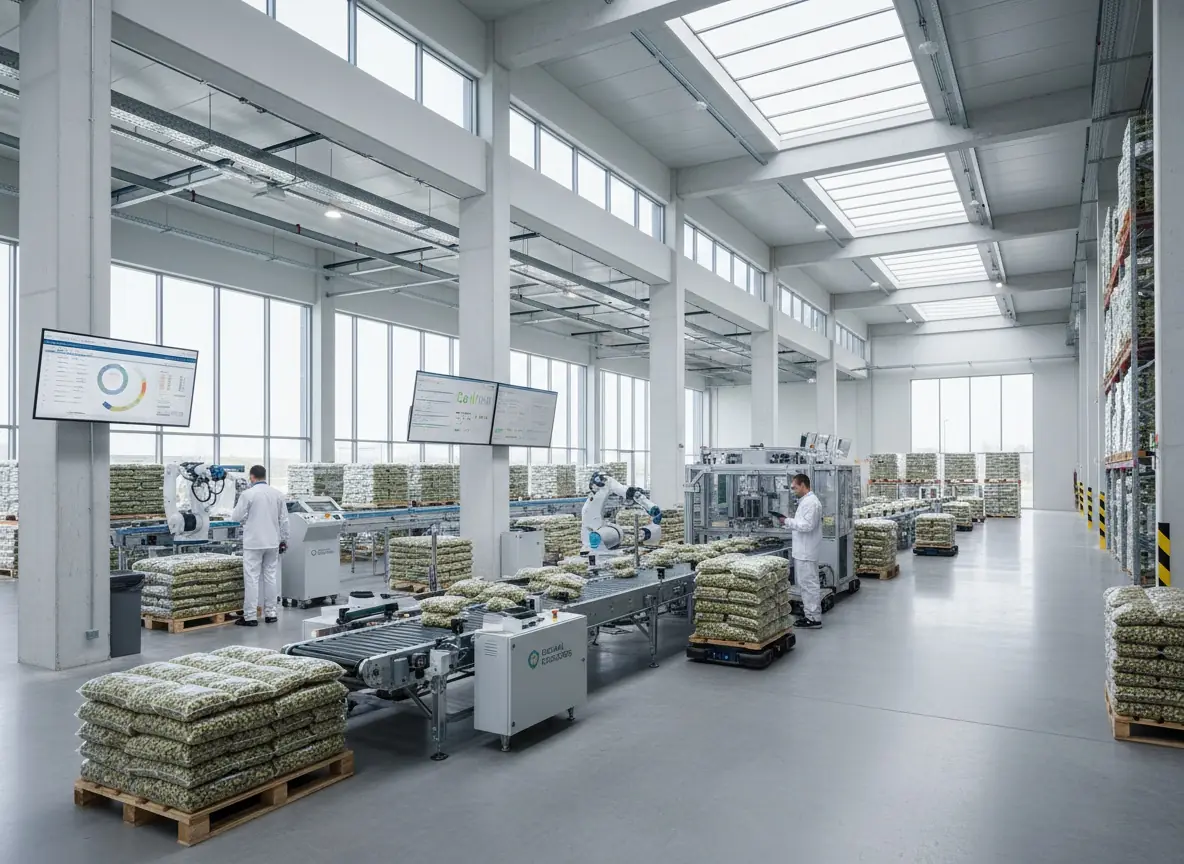
Logistics is where compliance meets quality. Pistachios lose flavor and color faster in heat and humidity, so the transport conditions matter as much as the speed of delivery. For long routes and warm seasons, temperature-controlled shipping helps preserve quality, while sealed packaging limits exposure to moisture and air along the way.
Lead times also deserve planning. Ordering ahead of harvest peaks and high-demand seasons protects both price and availability, a point we cover in our guide to bulk pistachio buying and our overview of pistachio supply trends. Building a realistic delivery window into your plan keeps your production line supplied without last-minute, high-cost orders.
Common importing mistakes and how to avoid them
Most import problems come from a short list of avoidable mistakes. Recognizing them in advance is the cheapest insurance against delays and rejected containers, because nearly all of them are about preparation rather than the product itself.
- Skipping recent aflatoxin testing: relying on old results, or none, is the leading cause of border rejection.
- Mismatched documents: inconsistent batch numbers, weights, or descriptions across documents stall clearance.
- Wrong HS code: incorrect classification leads to delay, reclassification, or unexpected duty.
- Ignoring origin-specific checks: not accounting for heightened controls on certain origins causes surprises at entry.
- Underestimating logistics: poor temperature control or tight timing degrades quality or interrupts supply.
The common thread is that importing pistachios rewards preparation. Buyers who align documentation, testing, classification, and logistics with the supplier before shipping consistently clear controls faster and protect both quality and cost.
Why Alyassin Farms?
At Alyassin Farms, we supply wholesale pistachios for export with the documentation and testing that import controls require. Our family heritage in pistachios dates to the 1970s, beginning with the family’s orchards in Syria, so we understand the product from the source through to how it must be prepared for international shipment.
We supply both Syrian and American pistachios, supported by our office in Seattle and direct relationships with California farms, and we work exclusively in wholesale supply for confectionery and chocolate manufacturers, bakeries, and distributors. You can request a paid sample with photos and video before committing, and we prepare documentation to match your destination market.
Frequently Asked Questions
What documents are required to import pistachios?
You typically need a commercial invoice, packing list, certificate of origin, certificate of analysis (COA), an aflatoxin test report, and a transport document such as a bill of lading. A halal certificate is often requested too. All documents must describe the same shipment consistently.
What is the HS code for pistachios?
Pistachios fall under HS heading 0802, with subheading 0802.51 for in-shell and 0802.52 for shelled product. These are the international six-digit codes; confirm the full national tariff code for your destination, as each country adds further digits and duty rates.
Why are pistachios tested for aflatoxin at import?
Aflatoxin is a natural toxin that can form with poor drying or storage, and both the EU and US enforce strict maximum levels in nuts. It is the most common reason pistachio shipments are rejected, so recent batch testing from the supplier is essential for clearance.
Do some pistachio origins face stricter import checks?
Yes. The EU applies increased official controls to certain origins, which can mean a higher frequency of sampling and required analytical results at entry. Because these lists are revised periodically, confirm the current rules for your origin and destination before shipping.
How should pistachios be shipped to preserve quality?
Pistachios are sensitive to heat and humidity, so sealed packaging and temperature control help preserve flavor and color, especially on long routes or in warm seasons. Planning lead times around harvest and peak demand also protects both quality and availability.
Who is responsible for import compliance?
The importer carries primary responsibility for meeting the destination’s rules, but a prepared supplier makes compliance far easier by providing matched documentation and recent testing. Aligning requirements before shipping is the most reliable way to clear controls without delay.