
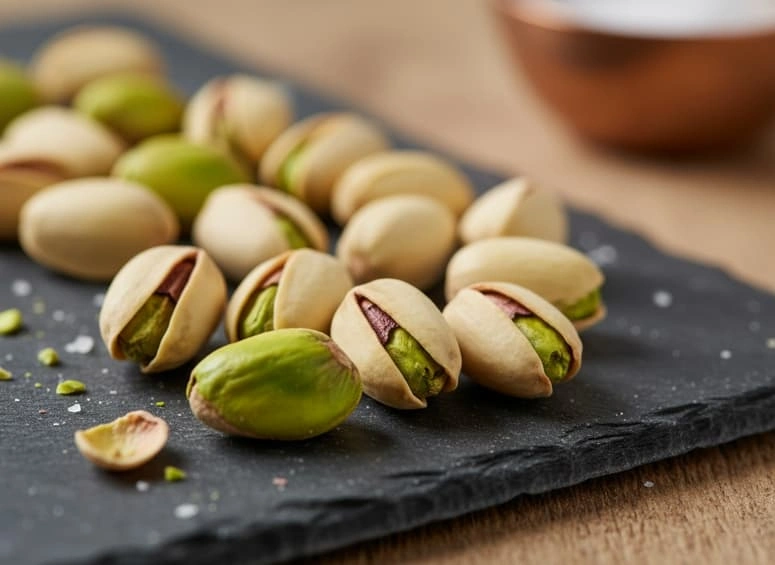
Few ingredients define a premium chocolate or confection the way pistachios do. Choosing pistachios for chocolate and confectionery is a decision that runs through the whole product — its flavor, its color, its texture, and the price point it can command. With pistachio-led products driving demand across Europe and North America, from filled chocolate bars to fine pastries, getting the sourcing right is what separates a standout product from an ordinary one.
This guide explains how chocolate makers and confectioners should source pistachios: which origin and form suit which product, how grade affects visible and hidden uses, where pistachio paste fits, and how to keep quality consistent. It builds on our broader B2B guide to sourcing wholesale pistachios, and connects to our guides on form, grade, and paste throughout.
In short: how to source pistachios for chocolate and confectionery
To source pistachios for chocolate and confectionery, match origin, form, and grade to each product. Use Syrian (Aleppo) pistachios where flavor and color lead, and American (California) where uniformity and volume matter. Choose the form by use — kernels and slices for visible decoration, granulated for texture, paste for fillings — and a grade that fits whether the pistachio is seen or hidden.
Why pistachios are central to premium chocolate and confectionery
Pistachios occupy a special place in confectionery because they deliver flavor, color, and perceived value at once. Their distinctive taste and vivid green are hard to replicate, which is why they anchor premium products rather than serving as a generic filler. For a chocolate maker, the pistachio is often the reason a customer chooses the product and accepts a higher price.
Demand has been amplified by pistachio-led products that have gone viral, most notably the kunafa-and-pistachio style of Dubai chocolate, which lifted global interest in pistachio sourcing sharply. The same appeal runs through traditional sweets like baklava and maamoul and through modern gourmet chocolate. For chocolate and confectionery makers, this means pistachio quality is directly tied to product success, so sourcing deserves the same care as the chocolate itself.
Which origin for chocolate: Syrian vs American
For chocolate and confectionery, Syrian (Aleppo) pistachios suit products where flavor and color are central — premium bars, fine pastries, and visible decoration — while American (California) pistachios suit high-volume production and uses where uniformity matters more than a distinctive character. Many confectioners use both, directing each origin to the products that show its strengths.
Origin is the first sourcing decision, and it follows directly from where the pistachio appears in the product. When the nut is visible and its flavor leads — a chocolate bar topped with whole pistachios, or a premium pistachio praline — the intense flavor and deep color of Syrian pistachios add perceived value. When the pistachio is processed at scale or its uniformity matters most, American pistachios are the practical choice.
| Use in chocolate / confectionery | Better origin | Why |
|---|---|---|
| Visible decoration on premium chocolate | Syrian (Aleppo) | Color and flavor drive perceived value |
| Fine pastries and gourmet sweets | Syrian (Aleppo) | Distinctive taste and appearance |
| High-volume filled chocolate | American (California) | Uniformity and reliable supply |
| Paste and fillings | Syrian, American, or blend | Flavor matters more than appearance |
For the full comparison across flavor, supply, and cost, see our guide to Syrian and American pistachios. The right answer is rarely one origin for everything — it is matching each origin to the role it plays in a specific product.
Which form for chocolate and confectionery
Form follows the product in chocolate and confectionery. Whole kernels and slices suit visible decoration and premium toppings, granulated suits texture and inclusions, halves suit blends, and paste suits smooth fillings and flavoring. Choosing the right form controls both appearance and cost, since more processing — like slices or granulated — adds to the price.
Form determines how the pistachio looks and behaves in the finished product, so it should be chosen by use rather than habit. A premium bar with pistachios on top needs whole kernels or slices for visual impact, while a textured inclusion calls for granulated, and a smooth filling calls for paste. The table below maps the common forms to confectionery uses.
| Form | Best use in chocolate / confectionery |
|---|---|
| Whole kernels | Visible decoration, premium toppings, inclusions |
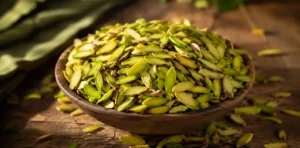
| Slices | Decorating chocolate and premium products |
| Granulated | Texture, toppings, fillings with crunch |
| Halves | Blends and products not needing whole nuts |
| Paste | Smooth fillings, ganache, and flavoring |
To choose forms precisely, see our guide to pistachio product forms. Matching form to use is one of the simplest ways to get both the look and the cost right.
Grade selection for visible vs hidden uses
Grade should match how visible the pistachio is in the product. For visible uses — toppings, decoration, premium bars — a higher grade with strong color and uniformity is worth the cost. For hidden uses — fillings, paste, ganache — a lower grade can deliver the same flavor at a better price. Matching grade to visibility avoids paying for quality the product does not show.
Grade is where chocolate makers most often overspend or underspecify. A premium grade earns its cost when the pistachio is on display, because color and uniformity carry the product’s appearance. But when the pistachio is ground into paste or hidden inside a filling, its appearance no longer matters, and a lower grade delivers the same flavor for less.
The practical approach is to grade by visibility: premium for what is seen, value for what is hidden. For help matching grade to each product, see our guide to choosing the right pistachio grade. This single distinction can meaningfully reduce cost without affecting the quality customers experience.
Pistachio paste and fillings
Pistachio paste is a core ingredient in chocolate and confectionery, used for fillings, ganache, and flavoring. Its quality is decided by the pistachios that go into it — origin, grade, and freshness shape the paste’s color, flavor, and texture. Because appearance matters less in paste, flavor and freshness are the priorities, which gives some flexibility on grade.
Pistachio paste deserves separate attention because it is central to so many chocolate and confectionery applications, from pralines to ganache. The quality of the paste is determined upstream, in the nuts chosen to make it: origin and freshness drive the flavor and color, while grade can be matched to the fact that the pistachio is no longer seen. This is one area where a value grade can deliver premium flavor.
For a full treatment of choosing pistachios for paste, see our guide to bulk pistachio paste. Whether you buy paste or produce it in-house, the principle is the same — the result is set by the pistachios that go into it.
Color, flavor, and consistency in finished products
In chocolate and confectionery, color, flavor, and consistency are not separate concerns — they are what the customer experiences. The vivid green of a quality pistachio signals premium quality on a finished product, while its flavor defines the taste, and consistency between batches keeps the product recognizable over time.
Consistency is especially important for a brand. A pistachio chocolate that looks and tastes different from one production run to the next undermines customer trust, even if each batch is good on its own. This is why a supplier who can hold color, flavor, and specifications steady across shipments matters as much as the quality of any single delivery — a theme covered in our guide to pistachio quality and food safety.
Quality and food safety for confectionery sourcing
Quality and food safety are essential when sourcing pistachios for chocolate and confectionery. Require a certificate of analysis and aflatoxin testing, confirm freshness and moisture, and ensure the product meets your market’s food-safety limits. Because the pistachio is a defining ingredient, any quality or safety issue reflects directly on the finished product and the brand behind it.
Food safety carries weight in confectionery because the pistachio is front and center, not a minor component. Aflatoxin testing and a certificate of analysis are essential, since aflatoxin cannot be detected by sight or taste and is the most common reason nut shipments are rejected. In the US, the Food and Drug Administration (FDA) sets the applicable food-safety requirements.
For confectioners sourcing internationally, these checks also intersect with import controls. See our guides to pistachio quality and food safety and importing pistachios into the EU and US for the full requirements. A supplier with strong documentation protects both your product and your customers.
Matching pistachios to specific products
Bringing origin, form, and grade together, the table below offers a practical starting point for matching pistachios to common chocolate and confectionery products. These are general recommendations — your exact choice depends on your recipe, positioning, and budget.
| Product | Origin | Form | Grade |
|---|---|---|---|
| Premium chocolate bar with visible pistachio | Syrian | Whole kernels / slices | Premium |
| Pistachio praline or filled chocolate | Syrian or blend | Paste | Standard to premium |
| Baklava and traditional pastries | Syrian | Granulated / whole | Premium for topping |
| High-volume filled confectionery | American | Kernels / paste | Matched to price |
| Ganache and flavoring | American or blend | Paste | Value to standard |
Use this as a guide rather than a rule, and request a sample to confirm the choice for your specific product. You can review available origins, forms, and grades on our products page.
Common sourcing mistakes for chocolate makers
A few recurring mistakes lead chocolate and confectionery makers to the wrong pistachio or unnecessary cost. Avoiding them keeps both quality and margin where they should be.
- One origin for everything: using a single origin regardless of product misses the strengths of each.
- Overspecifying hidden uses: paying for premium grade in fillings and paste where appearance is not seen.
- Wrong form for the application: choosing a form that does not suit the look or texture of the product.
- Ignoring consistency: a supplier who cannot hold color and flavor steady undermines a branded product.
- Skipping samples and documents: committing without evaluating quality and confirming safety multiplies risk.
The common lesson is that sourcing pistachios for chocolate is a product decision, not just a purchase. Matching origin, form, and grade to each application — and confirming quality — is what delivers a premium result at a sensible cost.
Why Alyassin Farms?
At Alyassin Farms, we supply pistachios built for chocolate and confectionery, matched to where the nut appears in your product. Our family heritage in pistachios dates to the 1970s, beginning with the family’s orchards in Syria, so we understand the flavor, color, and consistency that premium confectionery depends on.
We supply both Syrian and American pistachios in multiple forms and grades, supported by our office in Seattle and direct relationships with California farms. We work exclusively in wholesale supply for confectionery and chocolate manufacturers, bakeries, and distributors, and provide paid samples with photos and video so you can match the pistachio to your product before committing. Contact us to discuss the right origin, form, and grade for your chocolate or confectionery line.
Frequently Asked Questions
Which pistachios are best for chocolate?
For visible, premium chocolate, Syrian (Aleppo) pistachios are often preferred for their flavor and deep green color. For high-volume or processed uses where uniformity matters, American (California) pistachios work well. Many chocolate makers use both, matched to each product.
What form of pistachio is best for chocolate?
It depends on the use. Whole kernels and slices suit visible decoration, granulated suits texture and inclusions, and paste suits smooth fillings and ganache. Choosing the form by application controls both appearance and cost.
Are Syrian or American pistachios better for confectionery?
Neither is simply better — they serve different purposes. Syrian pistachios excel where flavor and color are central, while American pistachios excel where uniformity and volume matter. The best choice depends on the product and how visible the pistachio is.
What pistachios are used in Dubai chocolate?
Dubai chocolate, in its kunafa-and-pistachio style, relies on pistachios with strong flavor and color, often in paste and granulated forms for filling and texture. The product’s popularity has sharply increased global demand for quality pistachios suited to confectionery.
How do I choose pistachios for pistachio paste?
For paste, prioritize flavor and freshness over appearance, since the pistachio is ground and no longer visible. Origin drives the flavor and color of the paste, while grade can often be a value choice. See our guide to bulk pistachio paste for detail.
What grade of pistachio should I use for premium chocolate?
For premium chocolate where the pistachio is visible, a higher grade with strong color and uniformity is worth the cost. For hidden uses like fillings and paste, a lower grade delivers the same flavor at a better price. Match grade to how visible the pistachio is.