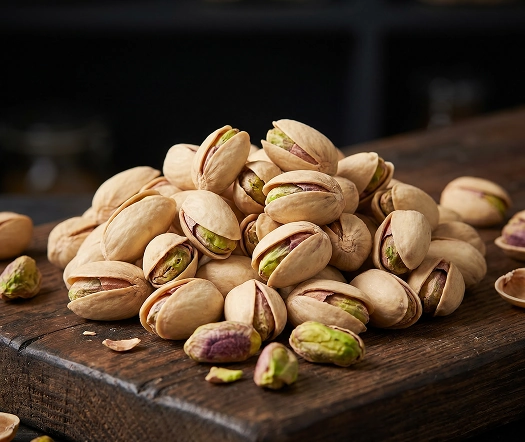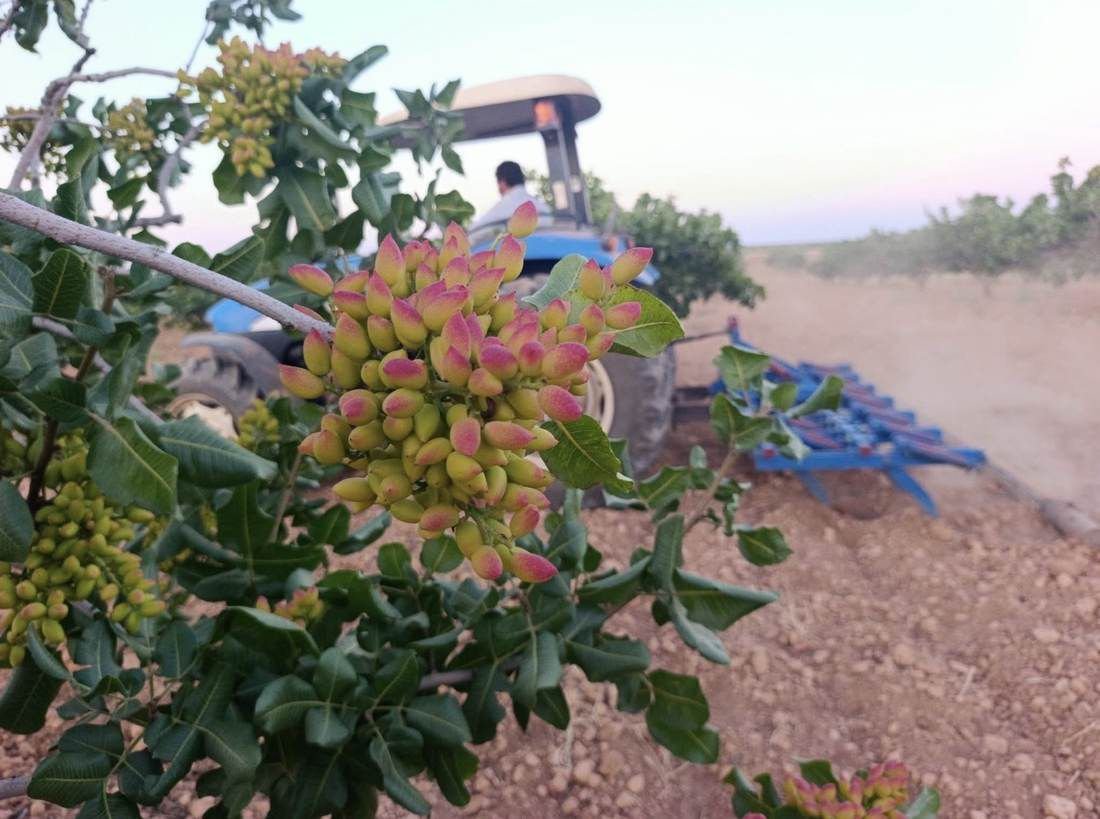
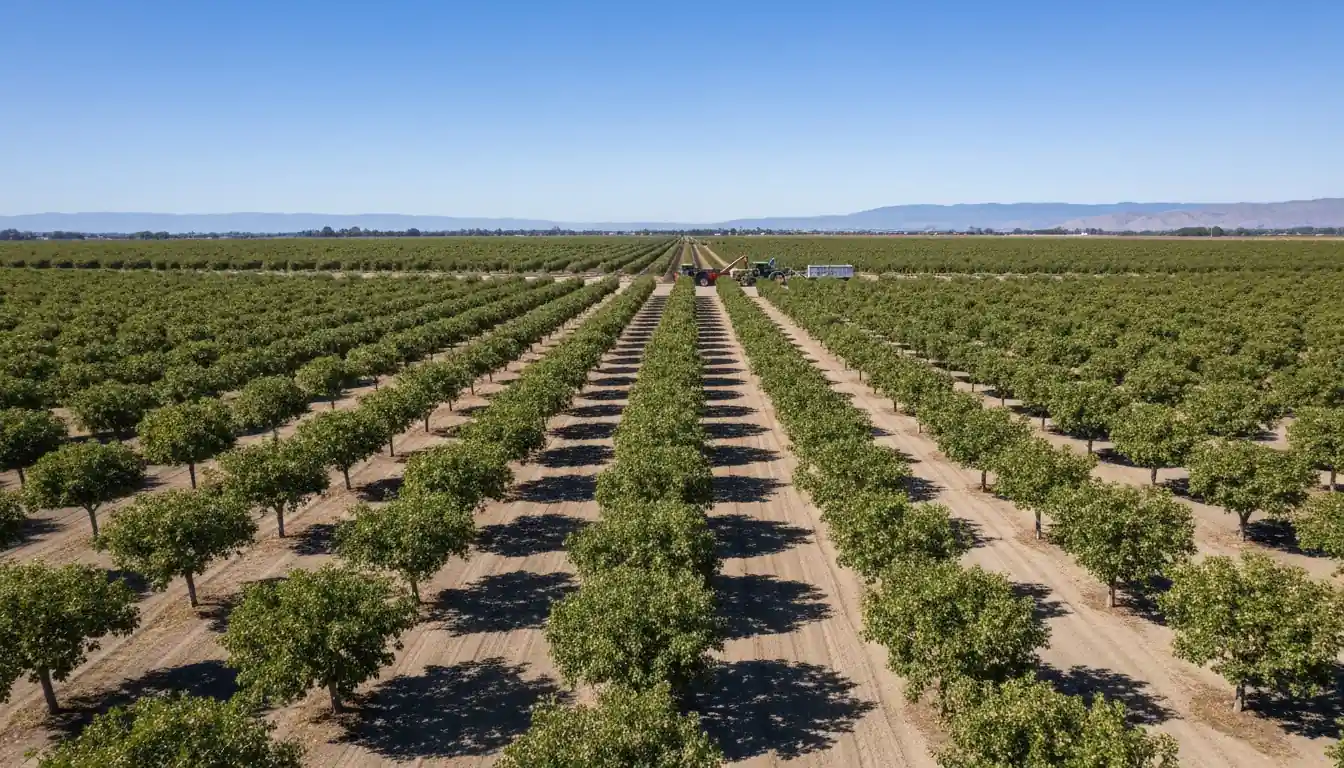
For confectionery manufacturers, bakeries, distributors, and private-label brands across Europe and North America, sourcing wholesale pistachios reliably is one of the most demanding parts of procurement. Pistachios are among the most expensive nuts on the market, and the price, quality, and availability of your supply feed directly into the cost and consistency of every product you make. A pistachio is rarely just an ingredient — it shapes the flavor, color, and perceived value of the finished item, so any instability in grade or supply shows up quickly on your production line and in your margins.
This guide maps out how to buy wholesale pistachios with confidence: the real difference between origins, how to match grade and form to each product, what actually drives price, the food-safety documents to demand, and how to choose a supplier who understands pistachios from orchard to factory. If you want to go deeper on two of the building blocks first, see our guides on choosing the right pistachio grade , pistachio product forms, and pistachio sizes.
In short: how to buy wholesale pistachios the right way
To buy wholesale pistachios well, start from the role the nut plays in your product, then choose the origin (Syrian for flavor and color, American for uniformity and volume), grade, and form to match. Confirm quality with a certificate of analysis and aflatoxin testing, request a paid sample before committing, and select a supplier who can hold quality and supply steady across repeat shipments.
What “wholesale pistachios” means for B2B buyers
Wholesale pistachios are pistachios bought in bulk for commercial use — processing, baking, manufacturing, or redistribution — rather than for retail consumption. The buyer is usually a confectionery or chocolate factory, a bakery, a distributor, or a brand building a private-label line. What separates a wholesale purchase from a retail one is that specifications, documentation, and supply continuity matter as much as the headline price per kilo.
Every wholesale pistachio decision really comes down to four variables that interact with each other: origin, grade, form, and packaging. Get these right for each specific product and you control both cost and consistency; get them wrong and you either overpay for quality you do not need or underspecify and damage the finished product. The sections below take each variable in turn.
- Manufacturers: need consistent specifications shipment to shipment so the product never changes on the shelf.
- Bakeries: often prioritize flavor and appearance for visible toppings and fillings.
- Distributors: need reliable volume, stable lead times, and complete documentation to resell with confidence.
- Private-label brands: need a supplier who can match a defined spec and scale with the brand as it grows — covered in our guide to private label pistachios.
Syrian vs American pistachios: which origin to source
The choice between Syrian and American pistachios is about purpose, not which is better. Syrian (Aleppo) pistachios offer intense flavor, a deep green color, and an elongated kernel, which suits premium, visible products. American (California) pistachios offer larger, more uniform kernels and dependable large-volume supply, which suits scale and consistency. Many manufacturers source both.
The two origins behave differently enough that treating them as interchangeable is a common and costly mistake. Syrian pistachios are prized where the nut is the visual and flavor centerpiece — luxury chocolate, fine baklava, gift-grade desserts. American pistachios are the practical backbone of high-throughput production, where uniformity and a steady supply line matter more than a distinctive regional character. The table below summarizes the trade-offs.
| Factor | Syrian (Aleppo) | American (California) |
|---|---|---|
| Flavor | Intense, distinctive | Milder, consistent |
| Color | Vivid, deep green | Green to lighter tones |
| Shape & size | Elongated, smaller | Larger, more uniform |
| Best for | Premium, visible-pistachio products | Volume, consistency, scale |
| Supply volume | More limited, specialized | Large and reliable |
| Typical positioning | Premium tier | Standard to premium workhorse |
For a full breakdown of how the two origins compare across flavor, price, and supply, see our dedicated guide to Syrian and American pistachios. You can also read more about each origin on our Syrian pistachios and American pistachios pages. In practice, working with a supplier who offers both origins lets you direct each one to the products it suits best while keeping a fallback if a single source becomes constrained.
Pistachio forms and grades: matching the nut to the product
Form and grade decide how a pistachio performs and what it costs. Form is the physical state — in-shell, kernels, halves, granulated, or slices — and each has an ideal use. Grade reflects quality tiers based on color, size, and uniformity. As a rule, the more visible the pistachio is in the finished product, the higher the grade and the more deliberate the form choice should be.
Pistachio forms and their uses
Form is the first thing to specify on a wholesale order, because it determines processing, appearance, and price. Kernels, granulated, and slices are the most common in manufacturing, filling, and decoration, while in-shell is used for packaging and direct resale. Form choice is especially important when sourcing pistachios for chocolate and confectionery, where the same nut may appear as paste, granulated, or whole. The table below maps the main forms to where they fit best.
| Form | Description | Best for |
|---|---|---|
| In-shell | Whole nuts in the shell | Packaging, direct resale, roasting |
| Kernels (shelled) | Whole nuts without the shell | Chocolate, paste, fillings |
| Halves | Kernels split in two | Blends and products that do not need whole nuts |
| Granulated | Small chopped pieces | Topping desserts, baklava, baked goods |
| Slices | Thin slivers | Decorating chocolate and premium products |
To go deeper on how each form is produced and chosen, see our guide to pistachio product forms.
Quality grades
Grades generally fall into three working tiers: a premium grade for products where the pistachio shows on the surface, a commercial grade for broad everyday use, and a food-industry grade for fillings and internal ingredients where appearance matters less. The practical rule is simple: the more the pistachio is seen and tasted in the final product, the more a higher grade pays for itself. For help matching grade to each product line, see our guide to choosing the right pistachio grade.
Packaging options
Packaging is not a cosmetic detail in wholesale supply. Options typically range from large sacks for bulk volume to 10 kg and 25 kg bags for flexibility, plus custom packaging on request. The right packaging protects color and flavor and extends shelf life — which matters even more when the product travels long distances or is stored before use. You can review the available range on our products page.
What drives wholesale pistachio prices?
Wholesale pistachio prices are set by several interacting factors: origin, grade, form, order quantity, harvest season, global demand, and packaging and shipping. Because these shift constantly, the most accurate way to know a real price is to request a specific quote for a defined product, quantity, and destination rather than relying on a general market figure.
Understanding what moves the price helps you read quotes correctly and avoid unfair comparisons between offers that are not actually for the same product. Two quotes can look far apart on price while describing very different goods, so the right comparison is always between matched specifications, not bare numbers.
- Origin: Syrian pistachios are usually priced higher as a premium product, while American pistachios are more competitive at large volume.
- Grade and form: higher grades and forms that need extra processing (such as granulated or slices) raise the price.
- Quantity: unit cost typically falls as order volume rises, which is what makes bulk buying more efficient.
- Season and global demand: price responds to harvest timing and to global demand waves, such as the surge tied to viral pistachio products.
- Packaging and shipping: packaging type, shipping destination, and transport conditions all feed into the final landed cost.
Because buying larger quantities lowers the unit cost, planning orders ahead gives you both a better price and steadier supply. For a full breakdown of what moves the price, see our guide to what drives the wholesale pistachio price; for the cost side specifically, see how bulk pistachio buying saves costs, and for context on demand and supply pressure, read our overview of pistachio supply trends. Note that global pistachio prices have risen sharply and supply has tightened in recent seasons, which makes origin and timing strategy a procurement decision, not only a flavor one.
Pistachio quality and food safety: what to verify before you buy
Before buying wholesale pistachios, verify quality with documentation, not just a visual check. The most important item is aflatoxin testing, alongside a certificate of analysis (COA), certificate of origin, and confirmation of moisture and foreign-matter limits. Proper drying, storage, and recent lab results from the supplier are the first line of defense for passing import controls without rejection or delay.
Aflatoxin is the single most sensitive point in pistachio quality. It is a natural toxin that can develop with poor drying or storage, and both the United States and the European Union enforce strict maximum levels for it in nuts. A reputable supplier manages this upstream through correct drying and storage and can provide current testing on request, so the issue never reaches your production line or a border inspection.
| Document | Purpose |
|---|---|
| Certificate of analysis (COA) | Confirms product specifications and safety per batch |
| Aflatoxin test report | Proves the product meets maximum allowed levels |
| Certificate of origin | Establishes the country where the pistachios were grown |
| Commercial invoice and packing list | Required for customs clearance and shipment matching |
| Halal certificate (on request) | Requested by many buyers for added assurance |
Because limits and procedures are updated periodically, confirm the current requirements with the official authorities before each purchase. In the US, the Food and Drug Administration (FDA) sets and enforces aflatoxin action levels for food; in the EU, the European Food Safety Authority (EFSA) underpins the maximum levels applied across member states. For the full set of quality checks and the documents to demand, see our guide to pistachio quality and food safety. Agreeing on documentation with your supplier in advance, matched to your destination, prevents the most common quality and compliance problems.
Importing pistachios into Europe and the US
Importing pistachios into the EU or US requires more than a quality product: shipments must clear food-safety and customs controls. In the US that means meeting FDA food-safety rules and correct customs classification; in the EU it means complying with maximum aflatoxin levels, border checks that can be heightened for certain origins, and accurate labeling. Getting the paperwork right before shipping is what avoids costly holds at the border.
The two markets share the same logic but differ in detail. On the US side, imported food is subject to FDA oversight, including preventive-controls expectations and the possibility of inspection or sampling at entry; an accurate commodity (HS) code and complete shipping documents keep clearance smooth. On the EU side, nuts including pistachios are subject to harmonized maximum levels for contaminants and to official controls at the point of entry, with some origins facing an increased frequency of checks.
- Classification: use the correct HS code for the product and form to avoid reclassification, delay, or extra duty.
- Food-safety compliance: meet the destination’s aflatoxin and contaminant limits and keep recent test results on hand.
- Documentation: certificate of origin, COA, commercial invoice, and packing list must match the shipment exactly.
- Labeling: product labels must satisfy the destination market’s requirements, including language and mandatory information.
- Border checks: plan for possible sampling at entry, which is more likely for certain origins and first-time suppliers.
Aligning these requirements with your supplier before the goods ship — not after they arrive — is the difference between a clean clearance and a rejected or delayed container. A supplier experienced in export markets will prepare documentation to match your destination from the start. For the full process, including HS codes and market-by-market rules, see our guide to importing pistachios into the EU and US.
How to choose a reliable wholesale pistachio supplier
Before committing to a wholesale pistachio supplier, it is worth evaluating them against clear criteria rather than price alone — because any lapse in quality or break in supply costs a factory far more than a small price difference. A trustworthy supplier combines real knowledge of the source, consistent quality, the ability to secure supply, and transparency in documentation.
- Source and origin knowledge: does the supplier clearly state the origin (Syrian or American) and how the product is sourced?
- Quality consistency: are size, color, and moisture specifications repeatable between shipments?
- Documentation: can they provide a COA, aflatoxin testing, certificate of origin, and a halal certificate on request?
- Supply stability: can they secure regular quantities through the year, including ahead of peak demand?
- Flexibility: can they adapt quantities, forms, and packaging to your factory’s needs?
- Samples and after-sales: do they offer samples and clear communication before and after the order?
These criteria are not equally important for every buyer. A premium producer weighs flavor and origin most heavily, while a high-volume manufacturer puts supply stability and specification consistency first. Define your priorities, then evaluate suppliers against them. For a dedicated step-by-step checklist of what to ask and the red flags to avoid, see our guide on how to choose a wholesale pistachio supplier.
Common mistakes when buying wholesale pistachios
Several recurring mistakes raise costs or damage the finished product. Avoiding them is as important as choosing the right supplier, because each one tends to surface only after a shipment has already been received and paid for.
- Buying on price alone: picking the cheapest offer without comparing origin, grade, and form often means a product that does not fit your line.
- Skipping the sample: committing to large quantities without first evaluating a sample multiplies quality risk.
- Ignoring documentation: not requesting aflatoxin testing and a COA exposes you to quality and compliance problems.
- Poor timing: delaying orders into peak season raises the price and shrinks availability.
- Overlooking storage terms: failing to agree on suitable packaging and transport conditions damages the product in transit.
The underlying lesson is that buying wholesale pistachios is an integrated decision, not just a quantity and a price. Buyers who treat quality, documentation, timing, and storage as one system get better and more stable results over the long term.
How to inspect a wholesale pistachio shipment on arrival
Inspecting a shipment on arrival is different from evaluating a pre-order sample. The sample confirms the product’s specifications before purchase; the arrival check confirms that what actually arrived matches what was agreed. Skipping this step can mean feeding non-conforming product into the line and discovering the problem too late. When a wholesale shipment arrives, check it against these points.
- Specification match: compare grade, form, and size against what is written in the contract, not a general impression.
- Color and uniformity: confirm consistent color and no marked variation between packages.
- Moisture and smell: excess moisture or any off odor signals poor storage or the onset of rancidity.
- Breakage and foreign matter: check the proportion of broken kernels, shell, and foreign material against the agreed limit.
- Packaging integrity: ensure packages are sealed, intact, and were not exposed to moisture in transit.
- Document match: reconcile batch numbers with the accompanying certificate of analysis.
Documenting the inspection with photos and a short receiving note — especially on a first order with a new supplier — gives you a clear reference if any dispute arises and reinforces quality consistency across successive shipments.
Storing wholesale pistachios to protect quality
Store wholesale pistachios in a cool, dry, dark place in sealed packaging to protect flavor and color and to slow rancidity. Heat, humidity, light, and air all accelerate quality loss, so large quantities are often kept in refrigerated or cold storage. In-shell pistachios keep longer thanks to natural protection, while shelled kernels and granulated forms are more sensitive and need closer care.
Quality responsibility does not end at purchase. Once a shipment arrives, how it is stored has a large effect on the product that reaches your line, particularly in warm climates or long storage periods. The lower the temperature, the longer the pistachios hold their quality, which is why many manufacturers use cold storage for bulk quantities and treat the supplier’s packaging as the first layer of protection.
Storage behavior also differs by form. The shell gives in-shell pistachios a natural barrier that extends storage life, while shelled and granulated forms oxidize faster and demand tighter sealing and cooler conditions. For shelf life by form and the signs of spoilage to watch for, see our guide to bulk pistachio storage and shelf life. Matching storage to form, and agreeing on suitable packaging with your supplier, keeps the product at its best right up to the moment it enters production.
How to order wholesale pistachios: samples, MOQ, and lead times
To order wholesale pistachios, define the origin, form, grade, and estimated quantity, then request a sample and a quote for your destination. Evaluate the sample against your product’s needs, confirm documentation and lead time, and place the order. Minimum order quantities and lead times vary by product, packaging, and shipping destination, so they are best agreed directly with the supplier.
A clear ordering process reduces risk on both sides and gets you to a stable supply faster. The sequence below works well for a first order with a new supplier and becomes quicker once specifications are settled.
- Define the spec: origin, form, grade, packaging, and an estimated quantity.
- Request a sample: evaluate quality, flavor, and specifications before committing to volume.
- Get a quote: ask for pricing based on your exact product, quantity, and shipping destination.
- Confirm documents and lead time: agree on COA, aflatoxin testing, origin, and a realistic delivery window.
- Place the order and inspect on arrival: check the shipment against the agreed specification when it lands.
You can start this process anytime through our contact page by specifying the origin, form, and estimated quantity you need. For a step-by-step walkthrough of MOQ, samples, and lead times, see our guide on how to order pistachios wholesale.
Why Alyassin Farms?
At Alyassin Farms, we carry a family heritage in growing and trading pistachios that dates to the 1970s, beginning with the family’s orchards in Syria. That heritage means we know pistachios from the source rather than only from the market, and we understand the detail from cultivation through to how the product performs in a factory.
Because supply stability has become decisive, we supply wholesale pistachios from two origins together: Syrian pistachios for flavor and authenticity, and American pistachios for consistency and large volumes, supported by our office in Seattle and direct relationships with California farms. This proximity to the American source gives our clients greater supply security amid global pressure on the pistachio market.
We work exclusively in wholesale supply for confectionery and chocolate manufacturers, bakeries, and distributors, with multiple forms, grades, and flexible packaging. You can request a paid sample of the product, with photos and video when needed, so you can evaluate quality yourself before making a purchase decision.
Frequently Asked Questions
What is the minimum order for wholesale pistachios?
The minimum order quantity varies by product type, form, packaging, and shipping destination. Because these factors differ from one order to the next, the minimum is best confirmed directly with the supplier based on the origin and form you need and where the shipment is going.
What is the difference between Syrian and American pistachios?
Syrian (Aleppo) pistachios have an intense flavor, deep green color, and elongated shape, which suits premium and visible products. American (California) pistachios are larger, more uniform, and milder, which suits high-volume, consistent production. Many manufacturers use both, matched to each product.
How are wholesale pistachio prices determined?
Prices depend on origin, grade, form, order quantity, harvest season, global demand, and packaging and shipping. Because these change continuously, the most accurate way to know a price is to request a specific quote based on your product, quantity, and destination.
What documents should I request from a pistachio supplier?
Request a certificate of analysis (COA), an aflatoxin test report, a certificate of origin, and a halal certificate on request. These confirm the product’s safety and quality and help you comply with FDA and EU import requirements for your destination market.
How should bulk pistachios be stored?
Keep bulk pistachios in a cool, dry, dark place in sealed packaging, and use refrigerated or cold storage for large quantities. In-shell pistachios keep longer due to natural protection, while shelled kernels and granulated forms are more sensitive and need cooler, tighter storage.
Can I get a sample before placing a wholesale order?
Yes. We provide paid samples, with photos and video when needed, so you can evaluate quality, flavor, and specifications before committing to a large quantity. You can request one through our contact page by specifying the origin and form you need.